
In Mumbai’s fast-paced financial sector, personal loans are readily available, but fraudsters are also eager to exploit this accessibility. The number of loan scams, phishing calls, and fraudulent lending apps targeting salaried workers, small business owners, and first-time borrowers has increased in tandem with the growth of digital lending in India. This guide describes warning signs to watch out for, how to protect yourself while borrowing responsibly, and how to identify personal loan frauds.
We at Bikesh Finserv believe that debt is not the issue. There is uninformed debt. This blog’s purpose is to assist you in distinguishing between a legitimate personal loan offer and a scam in India before you lose your money, information, or peace of mind.
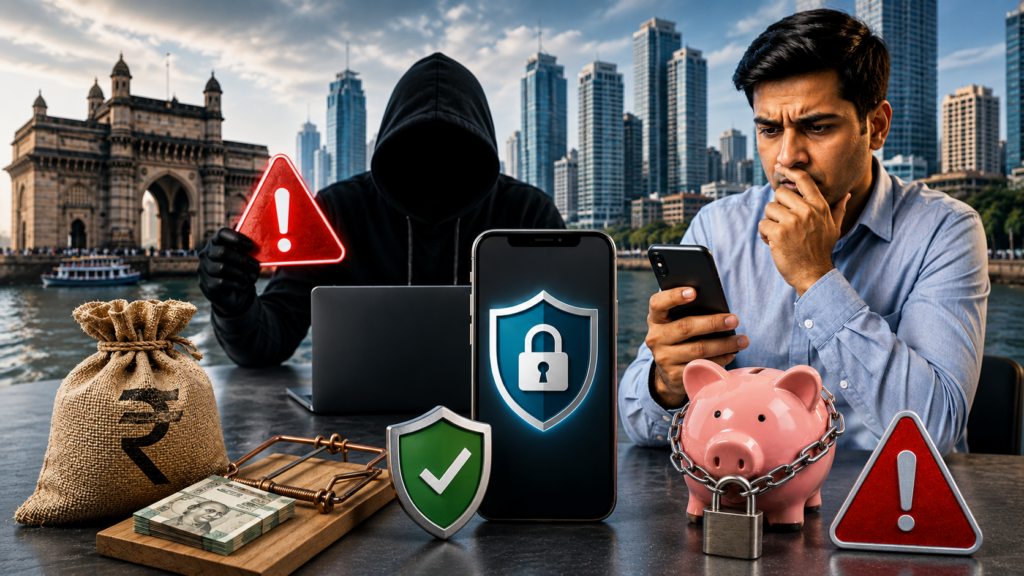
Why Personal Loan Scams Are Rising in Mumbai and Across India
Look, in a city like Mumbai, fraudsters can target you at any time. Since the demand for personal loans is quite high, the number of personal loan scams has also increased significantly. One of the most common scams is online phishing. These scammers create fake loan websites and try to convince you to apply through them. Once you enter your personal details or OTP, they can gain access to your account and empty your bank balance within minutes. That’s why it’s important to verify the lender’s authenticity and never share your OTP with anyone.
What Are Personal Loan Scams?
Any fraud plan in which someone pretends to be a lender or loan agency in order to steal money, personal information, or banking details from a borrower without ever intending to disburse a reputable loan is considered a personal loan scam. Calls, texts, WhatsApp chats, emails, scamy websites, and lending apps that closely resemble genuine ones can all be signs of these scams.
How Do Personal Loan Scams Work?
- In India, the majority of personal loan frauds have a similar pattern:
- Through a call, SMS, email, or WhatsApp, you receive an unwelcome personal loan offer that frequently promises loan approval.
- Before releasing any money, the “lender” requests payment for an upfront fee, processing fee, insurance cost, or “GST charge.”
- A time-bound loan offer that expires “today only” puts pressure on you to act without checking with the lender.
- The scam artist vanishes, or your information is utilized for identity theft once you pay the amount or disclose your banking and personal details.
The simplest approach to spot personal loan scammers before you lose money is to recognize this trend.
Common Personal Loan Scams in India You Should Know
1. Guaranteed Loan Approval Scam
Without first confirming your credit score, income, and supporting documentation, no respectable bank, lending organization, or RBI-registered NBFC can promise 100% loan acceptance. Offerings that guarantee acceptance are almost usually fraudulent.
2. No Credit Check Personal Loan Scam
If your CIBIL score is low, a “no credit check personal loan” could seem attractive, but reputable lenders always take creditworthiness into account. Offers that omit this stage raise serious suspicions of fraud.
3. Upfront Fee Personal Loan Scam
This is one of the most popular personal loan scams in India. Scammers request processing fees, insurance costs, or ‘refundable security deposits’ before disbursing the loan, and once paid, the loan is never delivered.
4. Online Phishing Loan Scam
To steal your financial information, OTPs, or personal data, fraudsters send bogus emails or links that look like they are from a bank or NBFC. Clicking these links on public Wi-Fi networks raises the risk even higher.
5. Fake Loan Websites and Fraudulent Loan Apps
Some scammers create bogus loan websites or fraudulent lending apps that closely resemble legitimate ones. These apps frequently want excessive permissions, including contacts, gallery, and SMS access, which legitimate lending apps rarely do.
6. Fake Loan Calls, Messages, and WhatsApp Scams
A bogus loan call, message, or WhatsApp scam often begins with an agent claiming to represent a ‘partner bank’ and pressuring you to disclose Aadhaar, PAN, or bank credentials over chat, which no legitimate lender does on WhatsApp.
7. Time-Bound and Unsolicited Loan Offers
Genuine personal loan online applications are initiated by the borrower. Avoid any unsolicited personal loan offer that uses urgency or a countdown timer.
Warning Signs of Personal Loan Scams
These are the warning signs of a personal loan scam that you should watch out for on any phone contact, message, or website.
• Acceptance is assured without requiring any paperwork or proof of income.
• Before the loan is disbursed, request upfront expenses.
• Time-limited loan offers put pressure on people to respond right away.
• There is no certified customer service, physical address, or official website.
• Calls or WhatsApp requests for passwords, OTPs, or banking details.
• Unofficial email domains, generic greetings, or poor grammar.
• Unnecessary access to contacts, photos, or SMS is desired by lending apps.
• No information on NBFC licensing or RBI registration is present.
How to Verify a Genuine Lender Before You Apply
Before providing any personal or financial information, go over this fast lender verification checklist:
- Determine whether the lender is an RBI-registered lender or an RBI-approved NBFC; this information is publicly available on the RBI website.
- Go to the lender’s official website directly (not via a forwarded link) and ensure it employs a secure, encrypted connection.
- Call the lender’s customer service line to confirm the loan offer independently.
- Request entire loan documents (sanction letter, interest rate, EMI schedule, and processing fee) in writing.
- Before deciding on a loan institution, research online reviews and complaints.
A reputable personal loan lender will never rush you, will never want payment before disbursement, and will always give accurate loan documents.
Personal Loan Safety Tips: How to Apply Safely
- Only apply for a personal loan online via a bank’s official website, a verified NBFC, or a reputable lending platform such as Bikesh Finserv.
- Avoid clicking on loan links sent via SMS, email, or social media from unknown senders.
- Never make a payment, no matter how modest, until your loan is formally sanctioned.
- Don’t use public Wi-Fi to complete loan applications or share personal information.
- Before signing any documents, use a personal loan calculator on the lender’s official website to independently verify the EMI, interest rate, and loan tenure.
Before agreeing, read the loan agreement carefully, particularly the processing fee and foreclosure terms.
What to Do If You Encounter Personal Loan Fraud
Take immediate action if you have already given information to a questionable lender or lost money as a result of a fake loan offer.
- Use the National Cyber Crime Reporting Portal to file a complaint with the Cyber Crime Cell, or get in touch with your local police department.
- Report the fraud to the Reserve Bank of India (RBI) if it uses a false bank or NBFC identity.
- To block any compromised cards or accounts, get in touch with your bank right away.
- As evidence for your loan fraud case, save screenshots of conversations, phone conversations, and payment receipts.
Authorities can lessen financial losses and find repeat offenders by knowing how to report loan fraud right away.
FAQs
What do I need to do if I receive a fake loan offer?
Avoid making any payments, sharing OTPs or bank information, and clicking any links. Use the lender’s official customer service number to confirm the offer directly. If it turns out to be fraudulent, report it to the Cyber Crime Cell or block and disregard the sender.
What warning indications point to a loan scam?
The most obvious indicators are requests for OTPs or passwords, demands for upfront fees, haste or countdown pressure, assured acceptance without verification, and the absence of a verifiable RBI registration or physical address for the lender.
How can one determine the credibility of a lender?
To independently verify any offer, look up the lender’s name on the RBI’s list of registered NBFCs, go to their official website by entering the URL (not through a forwarded link), and contact the customer service number provided.
When applying for a loan, is it safe to share your PAN or Aadhaar details?
Only during a legitimate application on the lender’s official, encrypted website or app; never over WhatsApp, SMS, or an unwanted call, as these are frequently used phishing channels.